
What Is the Rescue Diver Course and Is It Right for You?
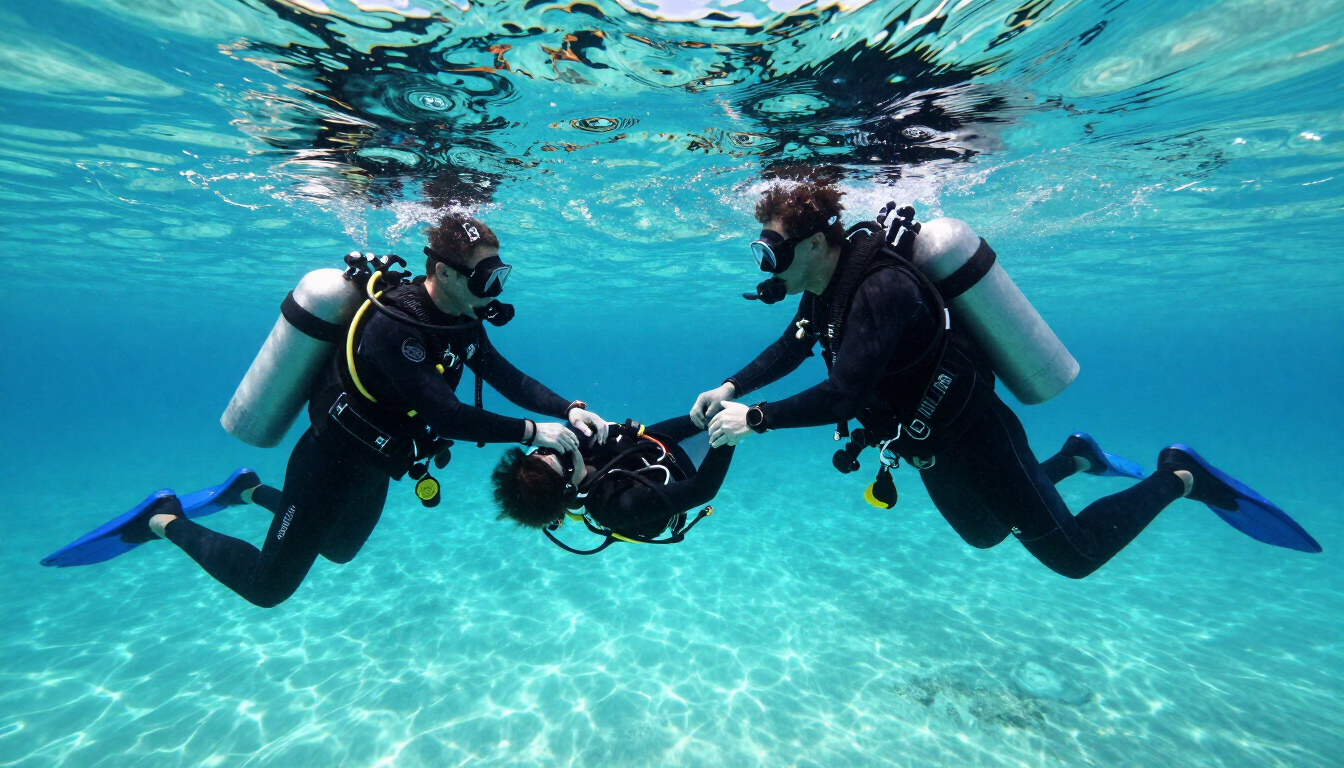
The Rescue Diver course is a critical scuba certification designed to teach divers how to prevent, manage, and respond to underwater and surface emergencies. It focuses on expanding a diver’s awareness beyond themselves, mastering skills like rescuing panicked divers, managing oxygen administration, and conducting effective underwater search patterns for missing teammates.
Why should you take a rescue diver course?
For many scuba enthusiasts, the transition from an Advanced diver to a Rescue Diver is the most significant leap in their diving career. While initial courses focus on your own buoyancy and comfort, the Rescue Diver course shifts the perspective toward the safety of the entire dive group. It transforms you from a recreational participant into a capable, prepared guardian of the underwater world.
Taking this course builds immense confidence. When you know how to handle a leg cramp, a malfunctioning regulator, or a panicked buddy, you naturally become more relaxed in the water. This relaxation leads to better air consumption and a more enjoyable experience. At Twobar Scuba, we believe that safety is the foundation of fun. By mastering these skills, you ensure that every Diving in Sodwana experience is as safe as it is spectacular.
Beyond personal growth, this certification is a prerequisite for professional-level diving. If you ever dream of becoming a Divemaster or an Instructor, the Rescue Diver course is your non-negotiable gateway. It provides the legal and practical framework for supervising others and ensures you are a valuable asset to any dive boat or charter you join.
What are the prerequisites for the course?
Before you dive into rescue scenarios, you must meet specific foundational requirements. Most training agencies, including NAUI, require students to have a baseline of experience to ensure they can handle the physical and mental rigors of the training.
Typical prerequisites for the Rescue Diver Course include:
- A minimum age of 15 (Junior Rescue Diver options exist for younger ages).
- Certification as an Advanced Open Water diver or equivalent.
- Proof of current First Aid and CPR training (within the last 24 months).
- A minimum number of logged dives to demonstrate buoyancy proficiency.
- A medical statement confirming you are fit for strenuous activity.
If you haven't yet reached these milestones, you can start your journey with our Training programs to get up to speed. It is essential that your basic skills, such as mask clearing and neutral buoyancy, are second nature before you attempt to rescue someone else, as you cannot help others if you are struggling with your own equipment.
Core skills you will master
The curriculum of the Rescue Diver course is divided into knowledge development and practical application. You will spend time in the classroom or via e-learning understanding the theory of diving accidents, followed by intensive water sessions. These sessions are designed to push your limits in a controlled, supportive environment.
One of the most vital components is learning to recognize stress in other divers. Often, an accident starts as a small problem—a foggy mask or a heavy breath—that escalates into panic. By spotting these signs early on the boat or at the surface, you can prevent a rescue from ever needing to happen. This