First Scuba Pool Session: What to Expect and Learn
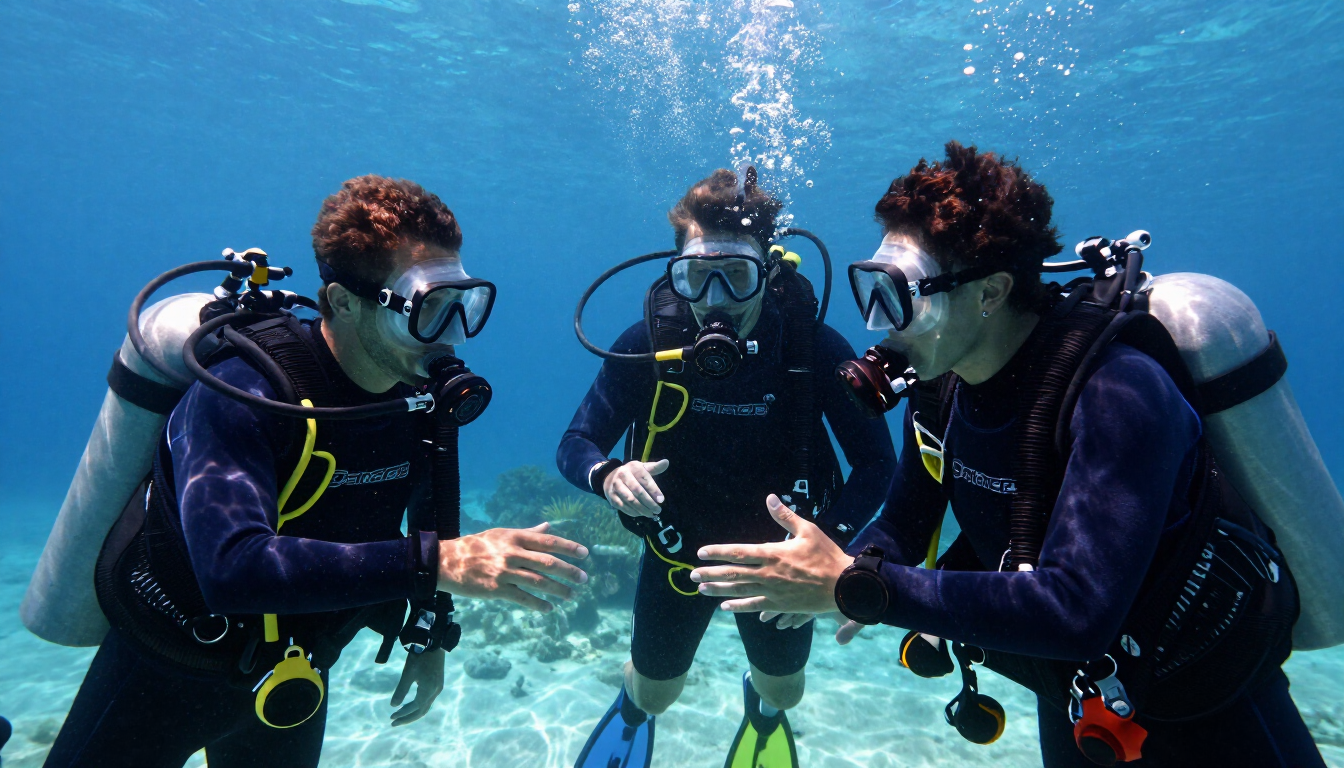
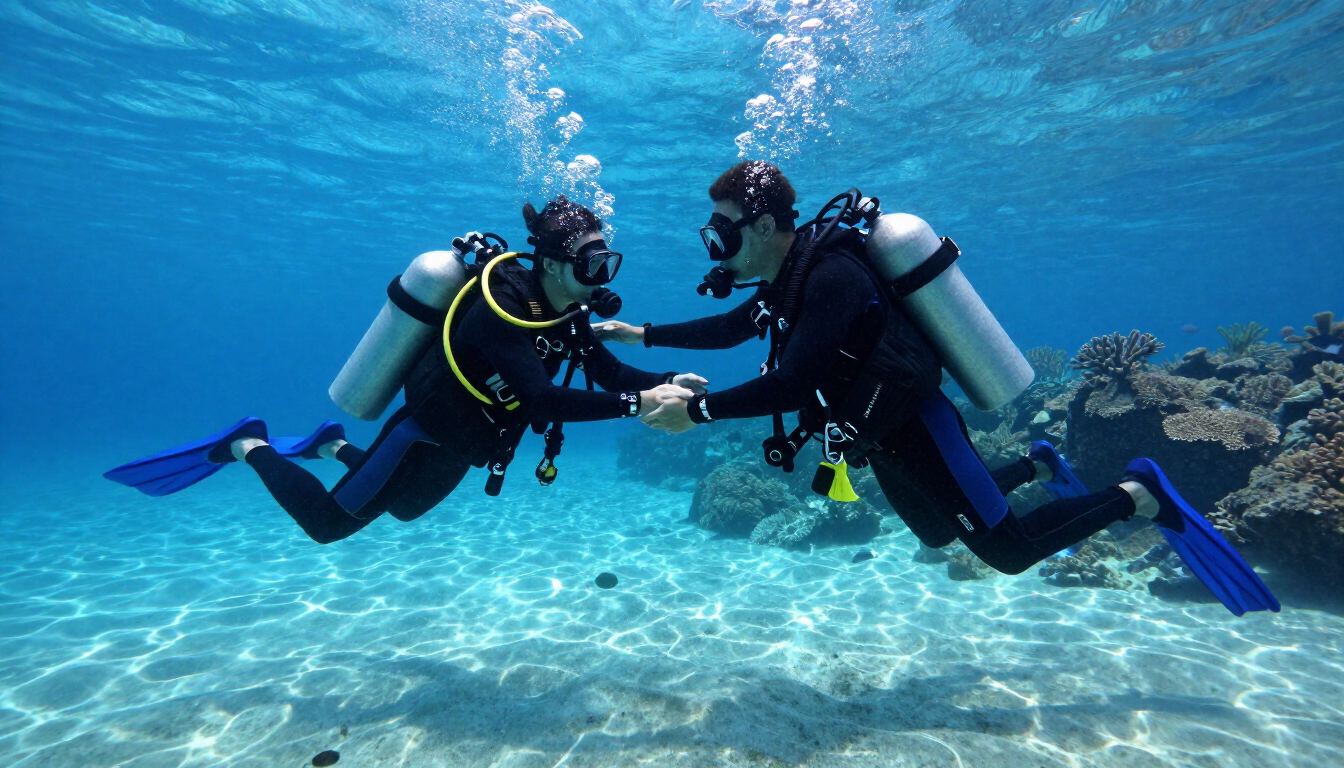
Your first scuba pool session is a controlled introduction to underwater breathing and essential safety skills. You will learn to assemble your equipment, practice buoyancy control, and master emergency procedures under instructor supervision. This foundational training ensures you are comfortable and prepared before transitioning to open water dives.
What is the purpose of the first scuba pool session?
The primary goal of the first pool session is to build a bridge between the theory you learned in your manuals and the reality of the underwater world. At Twobar Scuba, we believe that the pool is the most important classroom you will ever visit. It provides a safe, confined, and predictable environment where the water is clear, the depth is shallow, and there are no currents or waves to contend with. This allows you to focus entirely on your Training and the mechanics of your life-support equipment.
During this session, your instructor will focus on three main areas: equipment familiarity, psychological comfort, and skill mastery. Many new divers feel a mix of excitement and nerves. The pool session is designed to ease those nerves by showing you that the equipment works reliably and that you are capable of managing yourself underwater. By the time you leave the pool, the goal is for the gear to feel like a natural extension of your body rather than a heavy, foreign apparatus.
What gear will I use during my pool training?
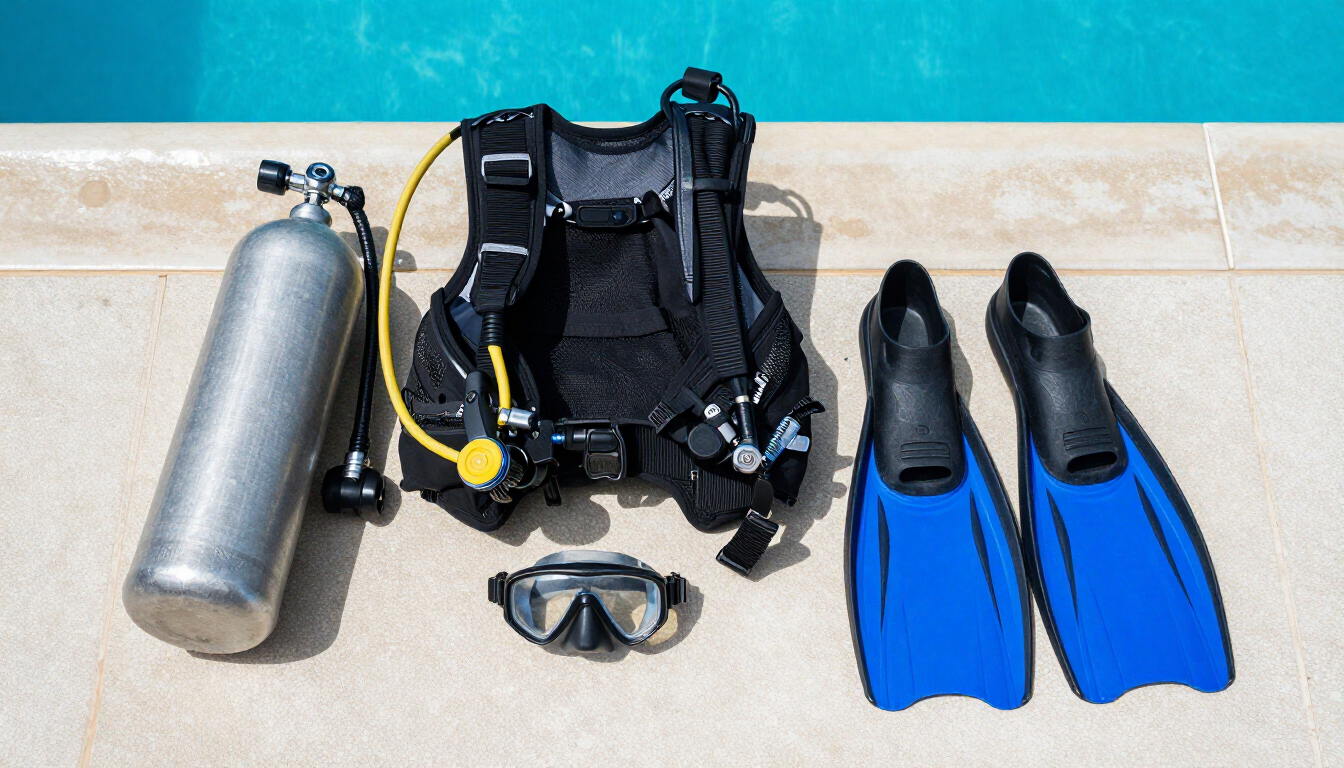
Before you even get into the water, you will spend a significant amount of time on the pool deck learning about the "Scuba Unit." Understanding how your gear functions is critical for safety and confidence. At Twobar Scuba, we provide top-notch, well-maintained equipment for all our students. During your first session, you will get hands-on experience with:
- The Buoyancy Control Device (BCD): A specialized vest that holds your tank and allows you to control your depth by adding or releasing air.
- The Regulator: The system that delivers air from your tank to your mouth at the exact pressure you need to breathe comfortably.
- The Cylinder (Tank): High-pressure vessels filled with filtered, compressed air.
- The Submersible Pressure Gauge (SPG): Your "fuel gauge" that tells you exactly how much air remains in your tank.
- The Mask, Snorkel, and Fins: Your windows to the underwater world and your primary means of propulsion.
You will learn how to connect the regulator to the tank, how to check for leaks, and how to verify that your air tastes clean and dry. This ritual, known as the pre-dive safety check, is something you will do before every single dive for the rest of your life.
How do you breathe underwater for the first time?
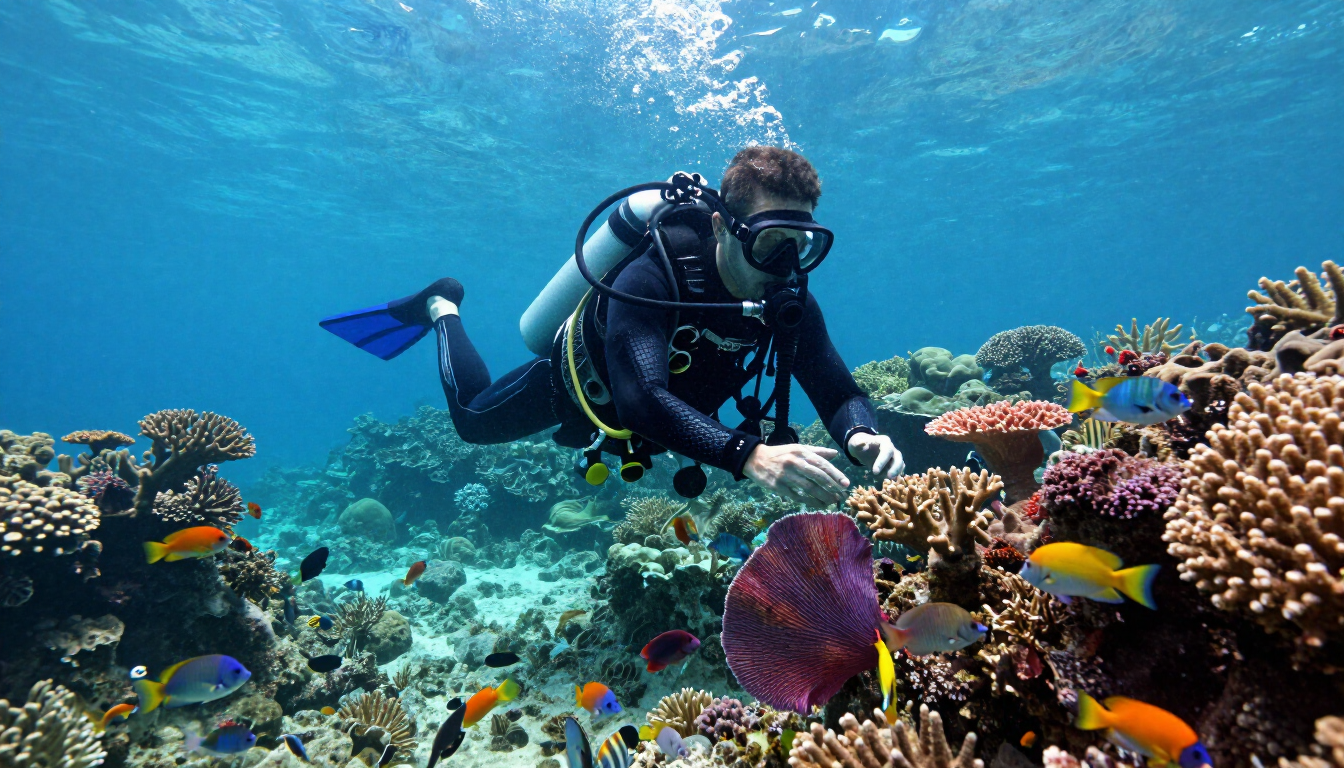
The moment you take your first breath underwater is something you will never forget. For most people, there is a natural instinct to hold your breath when your face hits the water. Your instructor will help you overcome this by teaching you the golden rule of scuba diving: Never hold your breath.
In the shallow end of the pool, you will start by simply putting your face in the water while breathing through the regulator. You’ll hear the rhythmic sound of your own bubbles—a soothing, mechanical